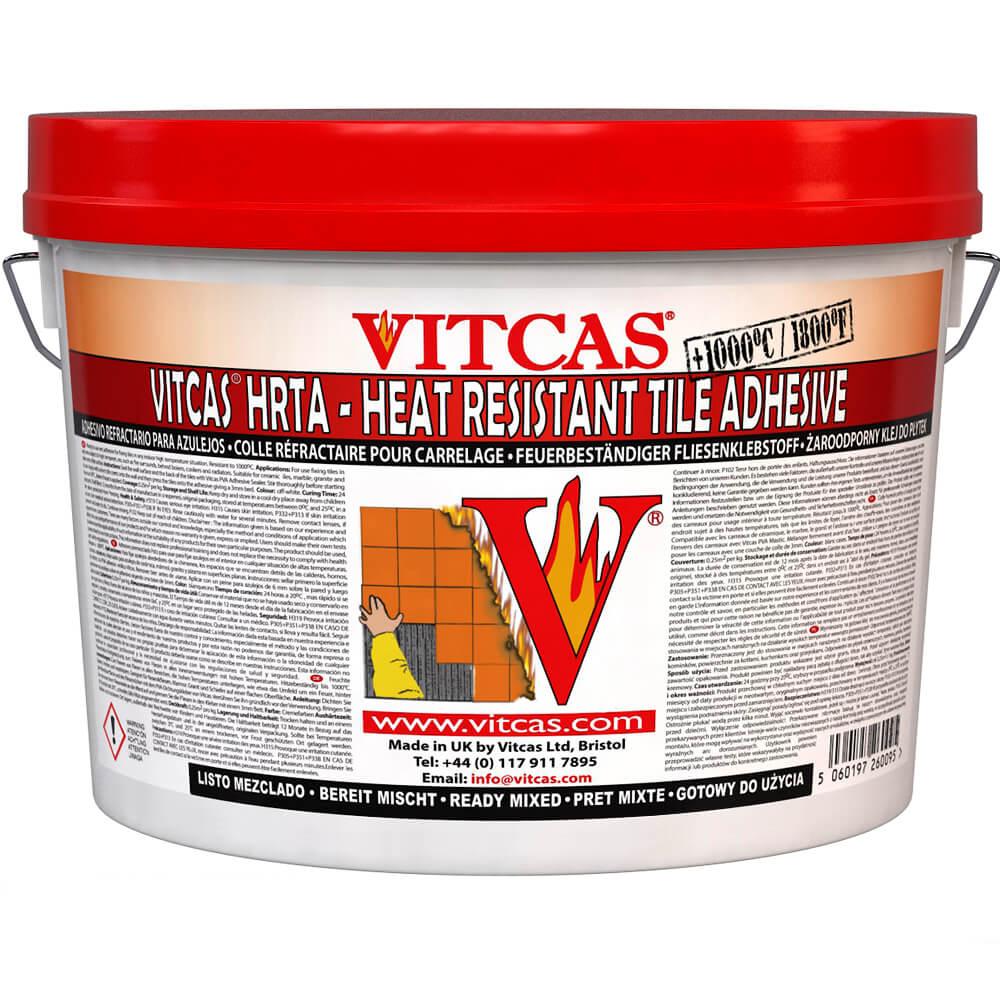
Tiles at the fireplace should be part of a prepared layout, not just decoration glued to a random old coating. Before selecting adhesive, check the wall and cladding requirements. The appropriate material must fit the substrate, location, and working conditions of the entire surface.
Read the purpose of the adhesive
Heat Resistant Tile Adhesive is a Vitcas adhesive for the documented indoor applications, with a declared resistance up to 1000°C. The instructions indicate a specific layer to be applied. The temperature of the adhesive does not automatically transfer to the tile, grout, or hidden wall materials.
Check the current requirements of the selected variant and surface compatibility. Do not use this product as any masonry mortar or deep void filler. Its purpose is to properly bond the appropriate facing to the prepared substrate.
Prepare the surface and tile layout
Check the stability and flatness of the wall. Remove loose residues using the method intended for the substrate. Dry-fit the layout, corners, and openings before adhesive application so that the decoration does not restrict required clearances or access to the device.
If the system includes HT Fireboard or Heat Resistant Plaster, check the requirements of the specific connection and the readiness of the previous layer. Simply matching product names does not replace surface preparation instructions.
Maintain a separate joint function
Adhesive under the tile is not automatically a material for grouting or sealing every movable detail. Plan the connections according to the cladding and fireplace documentation. Before normal burning, allow for the required curing, drying, and preparation of the materials used.
Record the product, substrate, and the actual work surface. Keep photographs of important connections before the final finishing. If a change occurs later, it will be easier to distinguish issues with the tile, joint, adhesive, and the layer under the entire cladding.