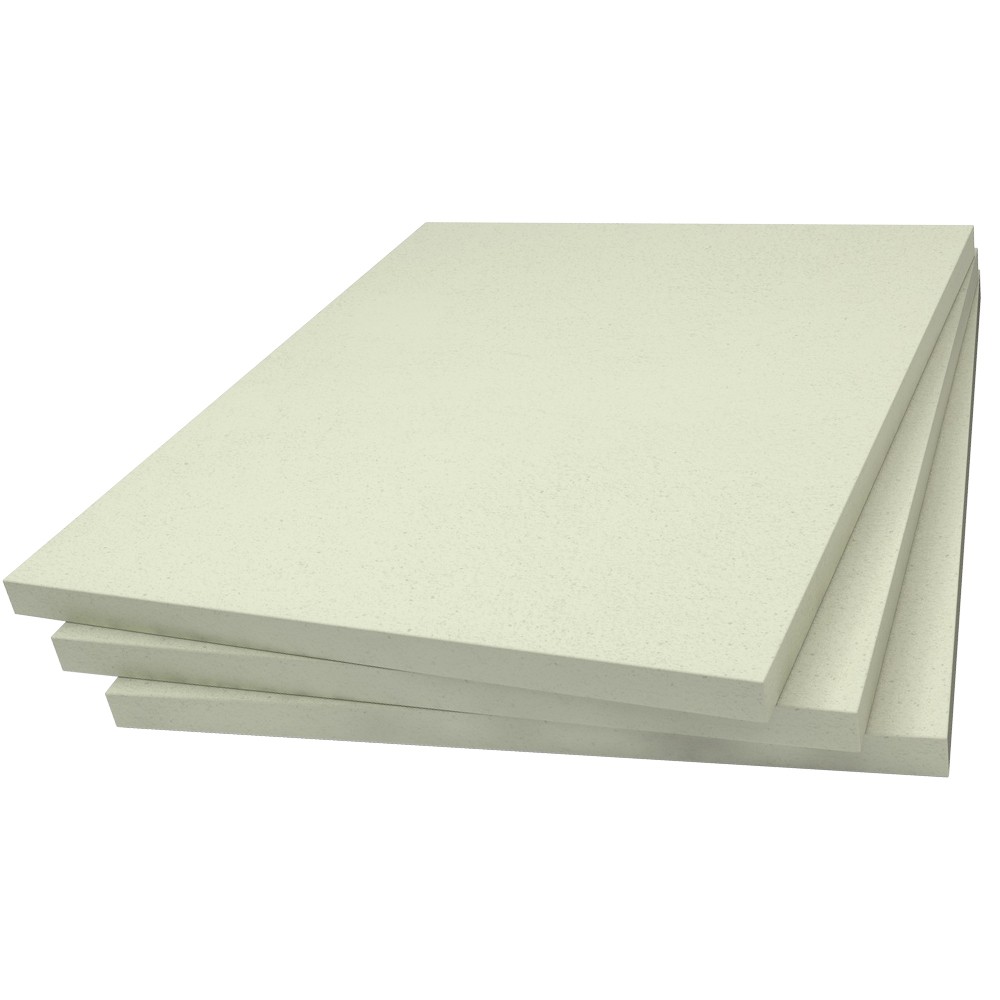
Ceramic fibre board provides a rigid insulation component where flexible blanket will not hold the required shape. It is used in suitable furnace linings, baffles and ducts. Choosing the board format is only the first step: its temperature duty, support and exposure to moving gases also need to be established.
Rigid board and flexible blanket serve different purposes
Vitcas Ceramic Fibre Board 1260 is a formed insulation board with a stated temperature rating up to 1260°C. Ceramic fibre blanket has a flexible format that can suit different installation arrangements. A similar temperature figure does not make the products interchangeable within an existing design.
Board may suit a location that needs a defined shape and a more rigid surface. Blanket can follow curved surfaces more readily. Fixing, edge protection and any required hot-face layer depend on the equipment design in both cases.
What should you establish before ordering?
Identify the temperature at the insulation rather than relying on flame temperature alone. Record the available space, component dimensions and whether tools, workpieces or moving parts could contact the surface. Mechanical exposure may require a separate protective layer.
Insulation thickness depends on heat flow through the complete construction. The board's temperature rating does not predict the outside casing temperature. Include the other layers, joints and surrounding conditions when assessing the assembly.
Can it replace a domestic stove panel?
A higher catalogue temperature is not a sufficient reason to choose ceramic fibre insulation. For domestic fireplace applications, the manufacturer points to specialist construction boards or vermiculite fireboards selected for the appliance. An existing firebox panel may have a different material, thickness and function.
Before cutting or removing fibrous material, check its current safety data sheet and required dust controls. Do not leave loose or unprotected insulation in an airflow leading into occupied rooms.