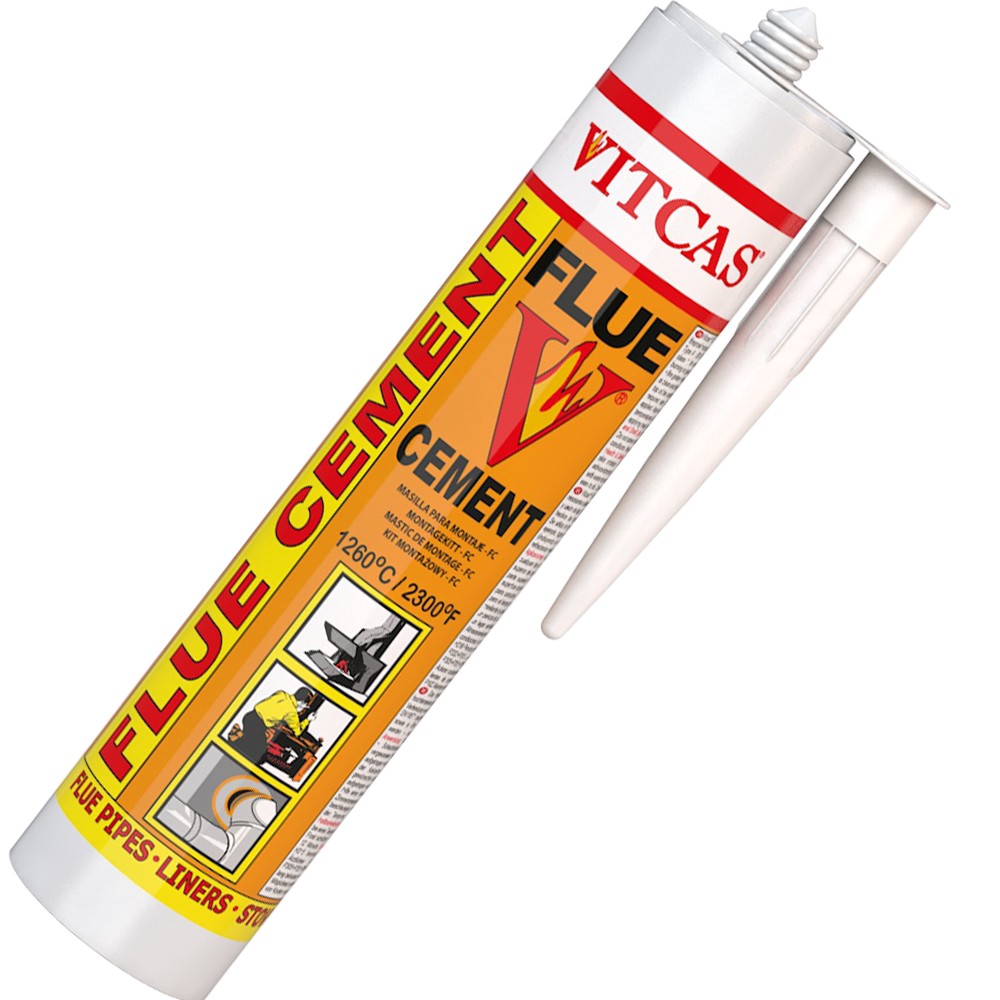
An older flue may consist of elements whose material cannot be identified just by the visible edge. Before repairing a gap, check the markings and documentation. Flue Cement is chosen based on the described joint function, not just because the location is near the stove.
Distinguish the elements and the method of connection
Determine whether you are assessing a ceramic liner, a metal pipe, or a passage through another part of the installation. Record the diameter, the position of the joint, and its accessibility. Do not disassemble the system without knowing the intended method of installation and subsequent inspection of the work.
Premium Flue Cement is a compound for specific connections of ceramic chimney components. The declared resistance up to 1250°C is one of the product's specifications. It does not confirm any geometry or compatibility with every metal system.
Assess the cause of the visible gap
Check the condition of both sides of the connection as well as their support. A loose component or traces of moisture requires identification before applying additional compound. Filling the edge should not hide a problem that continues to alter the position of the part.
Heat Resistant Silicone is used for other described, flexible connections. Its scope is not identical to Flue Cement. Select the material according to the instructions of the specific system; a similar cartridge packaging does not mean interchangeable use.
Prepare access and a work break
The repair is carried out on a cooled system, after determining the necessary surface preparation. Maintain the application requirements and further preparation of the material. Plan access for site assessment also after re-installing the covers.
Keep a photo of the connection, flue marking, and product variant. Record the scope of the completed work and the date of return to use after the required inspection. For the next repair, this set of data allows the actual detail to be reproduced rather than selecting the compound based on the colour of the old residue.